
A fire emergency can develop quickly, leaving little time for employees, customers, and visitors to react. For commercial property owners, having the right fire alarm system in place is essential for protecting lives, reducing property damage, and meeting fire safety requirements. However, choosing a system involves more than simply installing smoke detectors and alarm panels.
Commercial fire alarm systems are designed to detect potential fire emergencies, alert building occupants, and support an organized emergency response. Whether you operate an office building, retail store, warehouse, or large commercial facility, understanding how these systems work can help you make informed decisions about your property’s safety.
Let’s take a closer look at the different types of commercial fire alarm systems, their essential components, installation considerations, maintenance requirements, and other pertinent information.
An Overview of Commercial Fire Alarm Systems
A commercial fire alarm system is a network of interconnected devices designed to detect signs of fire and notify people inside a building. Depending on the system’s design, it may also communicate alarm signals to a monitoring service or coordinate with other building safety equipment.
Unlike basic residential smoke alarms, commercial systems are typically designed to accommodate larger buildings, multiple rooms, different occupancy types, and more complex emergency response requirements.
These systems serve several important purposes:
- Early fire detection: Identify smoke, excessive heat, or other conditions that may indicate a fire.
- Occupant notification: Alert employees, customers, and visitors through audible and visual signals.
- Emergency coordination: Communicate with compatible building systems and monitoring services when required.
- Code compliance: Help commercial properties satisfy applicable fire safety regulations.
- Property protection: Provide earlier warning that may allow emergency personnel to respond before a fire spreads further.
The specific equipment and capabilities required will depend on your building’s size, occupancy classification, layout, and applicable fire codes.
The Different Components of Commercial Fire Alarm Systems
Commercial fire alarm systems consist of several devices that work together to detect potential emergencies and initiate the appropriate response.
Fire Alarm Control Panels
The fire alarm control panel serves as the central communication hub for the entire system. It receives information from connected detection devices, identifies alarm or trouble conditions, and activates the appropriate notification equipment.
Modern commercial fire alarm panels may include digital displays, programmable functions, and networking capabilities that allow building personnel to identify the location of an alarm more efficiently.
Smoke and Heat Detectors
Smoke detectors identify airborne particles associated with combustion, while heat detectors respond to specific temperature conditions or rapid increases in temperature.
The appropriate detector depends on the environment. For example, smoke detectors may be suitable for office areas, while heat detectors may be considered in certain environments where dust, steam, or other airborne particles could cause unwanted smoke alarms. Detector selection and placement should always follow the applicable code and approved system design.
Manual Pull Stations
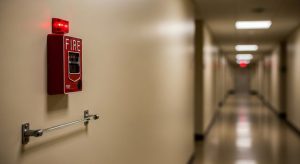
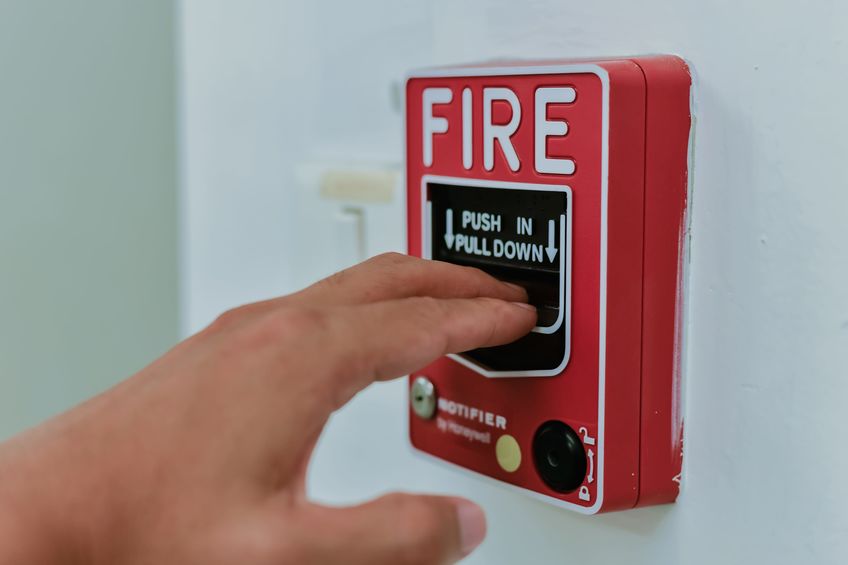
Manual pull stations allow building occupants to activate the fire alarm system when they discover a potential fire. These devices are commonly installed near designated exits and other locations determined by building codes and system requirements.
Audible and Visual Notification Devices
Notification appliances alert occupants when the system detects an emergency. Common examples include horns, strobes, speakers, and combination devices. Visual notification equipment is especially important for communicating emergencies to people who may not hear audible alarms. Certain facilities may also require voice evacuation systems that provide spoken instructions.
Power Supplies and Backup Batteries
Commercial fire alarm systems generally require a primary electrical power source and a secondary power supply. Backup batteries help maintain essential system functions during a power outage. Their capacity must be appropriate for the system’s required standby and alarm operating periods.
What Types of Commercial Fire Alarm Systems Are Available?
Not every commercial building requires the same type of fire alarm system. Understanding the available technologies can help business owners evaluate their options. Ther are conventional systems, which divide a building into detection zones. When a device activates, the control panel identifies the affected zone rather than necessarily identifying the individual device. These systems may be appropriate for certain smaller or less complex facilities, depending on code requirements and the building’s design.
Then there are addressable fire alarm systems. When an alarm or trouble condition occurs, the control panel can identify the specific device reporting the condition. This technology is beneficial in larger commercial properties, where quickly locating an activated detector may help building personnel and emergency responders.
As for larger commercial buildings and multi-building facilities, many benefit from networked fire alarm systems that connect multiple control panels. Depending on the equipment and approved design, these systems can coordinate with other life safety functions, including elevator recall, smoke control equipment, and emergency communication systems.
For businesses considering advanced fire alarm technology, EST fire alarm systems offer commercial control panel options with networking capabilities, digital audio functions, and user-friendly interfaces.
Commercial Fire Alarm System Requirements in Utah
Commercial fire alarm systems must meet applicable building and fire safety regulations. These requirements help establish appropriate detection, notification, installation, and maintenance practices.
According to the Utah State Fire Marshal’s Office, relevant standards include the International Fire Code (IFC), International Building Code (IBC), and NFPA 72, the National Fire Alarm and Signaling Code. However, fire alarm requirements are not identical for every business.
Factors that can influence system requirements include:
- Building size, height, and occupancy classification.
- Number of occupants and available exits.
- Whether the property has an automatic sprinkler system.
- Special hazards associated with building operations.
- Local fire authority requirements and applicable code amendments.
Business owners should work with qualified fire alarm professionals and the local authority having jurisdiction to determine which requirements apply to their property.
Commercial Fire Alarm Installation: What Should Businesses Expect?
The installation process for a commercial fire alarm system typically begins with an assessment of the property’s layout, occupancy, existing equipment, and fire safety requirements. This evaluation helps determine the number and types of detection devices needed, control panel capabilities, notification equipment, and any potential system integration requirements.
Once the building’s needs are understood, technicians can design a system and select the appropriate equipment. During this stage, businesses should consider factors such as future expansion, equipment compatibility, accessibility, and ongoing maintenance rather than focusing solely on installation costs. After obtaining the necessary approvals, technicians can begin installing the control panel, detectors, notification devices, wiring, and other essential components.
Before the system is placed into service, acceptance testing is performed to verify that everything operates according to the approved design and applicable fire safety requirements. The overall installation timeline can vary depending on the building’s size, system complexity, permitting requirements, and coordination with other contractors.
How Often Should Commercial Fire Alarm Systems Be Inspected?
Installing a fire alarm system is only the beginning. Regular inspection, testing, and maintenance help ensure the equipment continues operating properly.
Utah’s Fire Alarm Inspection, Testing & Certification Program addresses technician qualifications and annual inspection documentation. Specific inspection and testing intervals depend on the equipment and applicable standards.
How Much Does a Commercial Fire Alarm System Cost?
The cost of a commercial fire alarm system varies considerably depending on the property and equipment selected. Important pricing factors include building square footage, system type, number of devices, installation complexity, and integration requirements.
A smaller commercial office may require a relatively straightforward installation, while a multi-story facility could need addressable panels, extensive notification equipment, and networked capabilities. Businesses should also account for ongoing inspection, maintenance, repairs, and any applicable monitoring expenses.
As such, you should request a detailed proposal that explains the equipment, installation scope, code requirements, and anticipated ongoing costs.
How to Choose the Right Commercial Fire Alarm System for Your Business
Selecting the right fire alarm system starts with understanding your building’s current needs and potential future changes.
Before making a decision, consider these questions:
- Does the proposed system meet applicable fire codes and local requirements?
- Is the equipment appropriate for the building’s size and occupancy?
- Can the system accommodate future renovations or expansion?
- Are replacement components and technical support readily available?
- What inspection and maintenance services will be needed?
- Does the building require integration with other life safety equipment?
Working with an experienced commercial fire alarm provider can help clarify these considerations and identify equipment suited to your property.
Commercial Fire Alarm Systems in Salt Lake City, Utah
Choosing a commercial fire alarm system is an important investment in the safety of your building and everyone inside it. Understanding the available technologies, installation process, and maintenance requirements can help you select a solution that meets your property’s needs.
At Spectrum, LLC, we provide commercial EST fire alarm systems for businesses in Salt Lake City and surrounding Utah communities. Our services include fire alarm system design, installation, and ongoing service, with solutions tailored to individual commercial properties.
Whether you’re planning a new installation or evaluating an existing system, we’re here to help. Contact Spectrum, LLC today or call 801-266-1843 to discuss your commercial fire alarm needs and schedule an assessment of your property.
Recent Comments